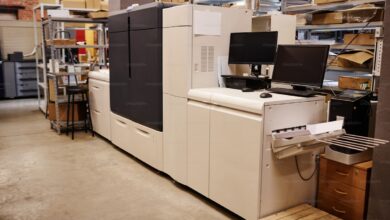
Smart Printing Technology: Building Efficient Office Infrastructure for the Digital Workplace

Modern offices depend on reliable technology to maintain productivity, and printing remains an important part of everyday business operations. Although digital documents continue to replace many paper-based processes, organizations still require dependable printing systems for contracts, reports, promotional materials, shipping labels, and official records.
Today’s printing technology combines intelligent hardware with cloud connectivity and automation, creating smarter office environments that support faster and more efficient workflows.
The Evolution of Office Printing
Traditional office printers were designed primarily for local document printing.
Employees needed direct connections, individual drivers, and manual configuration for every device. As businesses expanded, these systems became increasingly difficult to manage.
Modern printing infrastructure has introduced centralized management, wireless communication, and cloud integration, making printers accessible across multiple offices and remote work environments.
This evolution has significantly improved both convenience and operational efficiency.
Features of Smart Printing Systems
Smart printing systems include capabilities that extend far beyond producing paper documents.
Common features include:
- Wireless network connectivity.
- Mobile device printing.
- Cloud document access.
- Automatic firmware updates.
- Usage analytics.
- Secure authentication.
Together, these functions simplify printing while improving reliability and reducing administrative workloads.
Mobile Printing in Everyday Business
Mobile devices have become essential workplace tools.
Employees frequently create, edit, and review documents using smartphones and tablets. Smart printers allow these devices to send print jobs directly without requiring desktop computers.
This flexibility benefits professionals who travel regularly or work in multiple locations.
Mobile printing also supports faster customer service by enabling immediate document production when needed.
Printing for Marketing and Business Communication
Printed materials continue playing an important role in branding and customer communication.
Brochures, catalogs, flyers, product packaging, and business cards provide tangible experiences that complement digital marketing campaigns.
Modern digital printers allow businesses to produce professional-quality materials in smaller quantities, making personalized marketing more affordable.
Organizations can quickly update designs without the costs traditionally associated with large commercial print runs.
Reducing Printing Costs
Printing expenses can increase significantly without proper management.
Businesses can reduce costs by monitoring printer usage, encouraging double-sided printing, selecting energy-efficient devices, and scheduling regular maintenance.
Centralized reporting tools help identify unnecessary printing habits and optimize equipment placement throughout the office.
These improvements contribute to long-term savings while maintaining document quality.
Reliable Infrastructure for Growing Organizations
As companies expand, their printing requirements become more complex.
Scalable printing infrastructure allows organizations to add new devices, users, and office locations without disrupting existing workflows.
Cloud-based management platforms simplify expansion by providing centralized administration regardless of the number of printers deployed.
This flexibility makes modern printing systems suitable for businesses of all sizes.
Emerging Technologies
Artificial intelligence, predictive maintenance, and Internet of Things (IoT) connectivity are shaping the future of printing.
Printers will increasingly communicate with business software to automate workflows, detect maintenance issues early, and improve resource allocation.
These innovations will reduce manual administration while increasing reliability across office environments.
Conclusion
Smart printing technology has become an essential component of modern office infrastructure. By combining cloud connectivity, intelligent management, mobile access, and secure document handling, organizations can improve productivity while supporting flexible work environments.
Businesses that embrace modern printing solutions position themselves for greater efficiency, lower operating costs, and continued success in an increasingly digital workplace.