Cloud Printing Solutions for Modern Offices: Improving Productivity Through Connected Workflows
The way businesses manage documents has changed dramatically over the past decade. While paper remains essential for contracts, invoices, reports, marketing materials, and educational resources, the process of printing has become far more intelligent. Cloud printing has emerged as a practical solution that allows organizations to streamline document management while supporting flexible work environments.
Unlike traditional printing systems that rely on direct computer connections, cloud printing enables users to send print jobs securely through the internet. Employees can print documents from laptops, smartphones, or tablets regardless of their physical location, making the technology ideal for hybrid workplaces and distributed teams.
Understanding Cloud Printing
Cloud printing connects printers to centralized online platforms rather than individual computers. Users upload documents to a secure service, which then sends the files to an authorized printer.
This approach removes many limitations associated with traditional office printing. Employees no longer need to install printer drivers on every device or remain connected to the same local network.
Cloud-based systems also simplify printer management because administrators can configure permissions, monitor activity, and update devices from a single dashboard.
Advantages for Modern Businesses
Organizations of every size benefit from cloud printing.
Small businesses appreciate simplified setup and reduced IT maintenance. Medium-sized companies gain better collaboration across departments, while larger enterprises can manage hundreds of printers across multiple office locations.
Additional benefits include:
- Faster document sharing.
- Centralized print management.
- Reduced hardware maintenance.
- Secure remote printing.
- Better resource monitoring.
These improvements contribute to greater workplace efficiency and lower operational costs.
Supporting Hybrid Work Environments
Remote and hybrid work have become common across many industries.
Employees frequently work from home, client offices, or shared workspaces. Cloud printing ensures they can still access company printing resources whenever necessary.
For example, a sales representative can submit a proposal for printing before arriving at the office, while administrative staff can prepare documents without requiring direct file transfers.
This flexibility supports productivity regardless of employee location.
Security Considerations
Business documents often contain confidential information.
Modern cloud printing platforms include authentication systems, encrypted communications, and secure print release features that prevent unauthorized access.
Many organizations also implement user permissions that restrict access to specific printers or document categories.
These measures help maintain compliance with internal security policies while protecting sensitive business information.
Smart Printers and Intelligent Management
Today’s smart printers offer more than basic printing capabilities.
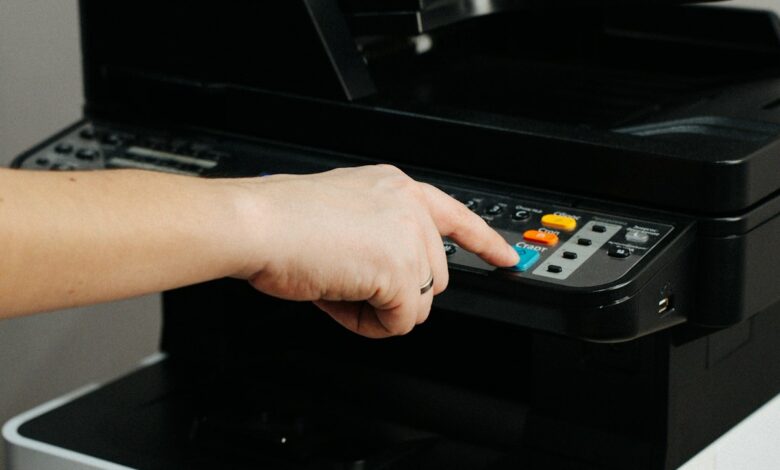
Many models feature touch-screen interfaces, wireless connectivity, automatic diagnostics, and predictive maintenance notifications.
Some systems monitor toner levels, paper supplies, and device performance in real time. Administrators receive alerts before problems interrupt business operations.
This proactive approach minimizes downtime and keeps office workflows running efficiently.
Sustainability Through Smarter Printing
Environmental responsibility has become an important business objective.
Cloud printing helps reduce waste by allowing organizations to monitor print volumes, eliminate unnecessary documents, and encourage responsible printing habits.
Many businesses also implement duplex printing, energy-saving modes, and recycled paper initiatives as part of their sustainability strategies.
Combined with efficient hardware, these practices reduce both environmental impact and operating expenses.
The Future of Connected Printing
Printing technology continues evolving alongside digital transformation.
Artificial intelligence may soon optimize print queues automatically, predict maintenance requirements with greater accuracy, and recommend cost-saving improvements.
Integration with cloud storage platforms, collaboration software, and business applications will further simplify document workflows.
As organizations continue modernizing their operations, cloud printing will remain an essential part of efficient office infrastructure.
Conclusion
Cloud printing has transformed document management by providing flexibility, security, and centralized control. Combined with smart printers and modern office infrastructure, it enables businesses to improve productivity while reducing operational complexity.
Organizations that invest in connected printing technologies are better prepared to support today’s flexible workforce and tomorrow’s digital workplace innovations.